
Plug-and-Play vs. Hardwired LED Bulbs
Type A vs. Type B LED Lights
When upgrading an existing lighting system, the difference between ballast-compatible and direct-wire LED lamps is more than a technical distinction; it is a strategic decision with long-term implications for installation, maintenance, safety, and energy use.
Fluorescent and CFL fixtures are still common in many commercial and institutional buildings. Replacing them with LEDs is a smart move, but not all LED retrofit lamps install the same way. The two primary options, known as Type A and Type B, approach retrofitting from different angles. Each offers distinct advantages, and both require careful consideration depending on your facility’s infrastructure and long-term goals.
The Plug-and-Play Approach: Type A LED Lamps
Type A LED lamps, commonly referred to as ballast-compatible or plug-and-play, are designed to operate through a compatible existing ballast. When the lamp-and-ballast combination appears on the manufacturer’s current compatibility documentation, installation may be as simple as removing the fluorescent lamp and installing the approved LED replacement. The ballast model should always be confirmed before ordering or installing the lamp.
For a quick and low-disruption upgrade, this method can be especially useful. Whether you are working in a large office, school or retail store, replacing many compatible lamps without rewiring every fixture can reduce initial labor and minimize downtime.
However, the convenience has caveats. Not every ballast is approved for every Type A LED lamp. Ignoring the current compatibility list can cause flicker, reduced performance, or a lamp that does not operate. Keeping the existing ballast also means retaining a potential failure point. If the ballast fails, the lamp may stop working and require a maintenance visit beyond routine relamping.
This is the point at which the initial installation savings may be offset later. Continued dependence on an aging electrical component can add power consumption, heat, and maintenance uncertainty to the long-term return-on-investment calculation.
Going Ballast-Free: Type B LED Lamps
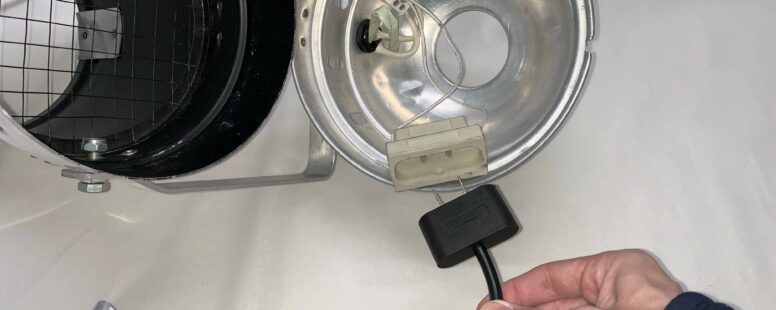
Type B installation removes or bypasses the ballast and supplies the approved line voltage directly to the LED lamp according to its wiring configuration. Because wiring methods can differ by product, socket, and single-ended or double-ended design, installation should be completed by qualified personnel following the current instruction sheet and applicable electrical requirements.
This method offers long-term benefits. By removing the ballast from the circuit, you eliminate its energy consumption, reduce heat generation, and remove a common maintenance issue. Direct-wire LEDs may also improve overall system efficiency because the lamp is no longer operating through an intermediary component.
That long-term simplicity comes with an upfront investment. Installation requires access to fixture wiring, qualified personnel, and careful attention to safety. Incorrect wiring can create serious hazards, particularly when the product’s required single-ended or double-ended configuration is not followed.
For facility managers, Type B may be worth reviewing when ballasts are nearing the end of their life or when lighting systems are being comprehensively upgraded. It requires more work up front, but it can simplify future maintenance and remove the ballast as a future failure point.
Type A, Type B and Type A/B at a Glance
| Installation Type | Uses Existing Ballast? | Fixture Rewiring? | Primary Advantage | Main Consideration |
|---|---|---|---|---|
| Type A | Yes | Usually no | Faster initial installation | Lamp and ballast must be compatible |
| Type B | No | Yes | Removes ballast as a future failure point | Requires correct wiring and qualified installation |
| Type A/B | Initially optional | Depends on chosen mode | Greater project and inventory flexibility | Only available on specifically approved models |
Why Not Both?
Traditionally, upgrading to LED meant choosing a path and sticking to it. If you wanted the fastest, least disruptive installation, you would choose a compatible Type A lamp. If you preferred to remove the ballast as a future maintenance concern, you would choose a Type B direct-wire system. Each route has benefits and tradeoffs.
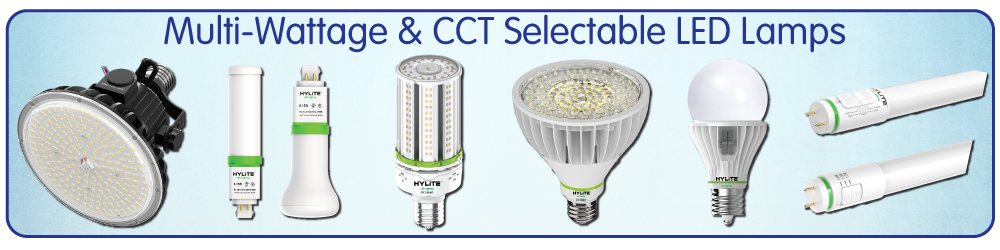
Certain LED retrofit lamps are specifically designed as Type A/B or multi-mode products. These models can operate through an approved compatible ballast or on direct line voltage after the ballast is properly removed or bypassed. This capability should never be assumed across an entire product category; the exact product model, ballast, and instruction sheet must be confirmed.
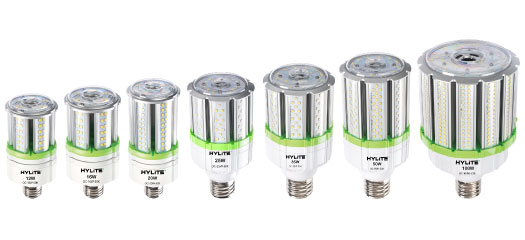
HyLite’s Multi-Mode Omni-Bulb is an example of this approach. The current product family is designed for commercial CFL replacement, supports selectable 8W, 10W, 12W and 15W settings and operates on universal 100–277V input. It may operate through an approved compatible ballast or through an approved direct-wire installation, but the exact ballast and wiring method must be checked against the current product documentation.
This dual compatibility can provide real-world benefits:
- It gives facilities flexibility in how and when they retrofit, making phased projects easier across large buildings or portfolios.
- It can simplify inventory management by allowing one approved model to support more than one installation path.
- It may allow the same approved lamp to remain in service if the installation is later converted from a compatible ballast to the product’s approved direct-wire method.
Which Current HyLite Products Support These Options?
Installation methods vary by model. Use the product page, current spec sheet, compatibility list, and instruction sheet for the exact lamp being considered.
Making the Right Choice for Your Facility
If your facility requires a rapid upgrade with minimal disruption and the ballasts are relatively new, a compatible Type A lamp may be the most sensible option. If your ballasts are old, failing, or incompatible, direct-wire may offer a cleaner long-term path when completed correctly by qualified personnel.
For many facility managers, the flexibility of an approved multi-mode lamp offers a strategic advantage. It can support faster initial deployment while preserving the option to address ballast failures later, provided the selected lamp is specifically approved for both installation modes.
Retrofitting lighting is rarely a one-size-fits-all project. Finding a solution that fits the building’s infrastructure, maintenance plan and staff capabilities is key.
Before Choosing Ballast-Compatible or Direct-Wire
Record the following information before requesting a recommendation or ordering replacement lamps:
Not Sure Which Installation Method Fits Your Facility?
Send HyLite the existing lamp number, ballast model, voltage, fixture photos, and project quantity. We can help identify whether a compatible ballast, direct-wire, or multi-mode product should be reviewed for the application.
 English
 Spanish
 French
 Arabic
 Ukrainian
 Portuguese
 German
 Italian
 Russian
 Dutch
Dutch