G24 LED Plug-In Lamps for CFL Replacement
Learn how to identify G24 CFL bases, compare 2-pin and 4-pin lamp holders, and choose the right LED replacement path for commercial plug-in lamp fixtures.
Identify the Right G24 Replacement
G24 lamps are common in commercial CFL fixtures, but the base, pin count, ballast, and wiring method all matter. This guide explains what to check before selecting a replacement so you can move from CFL to LED with fewer compatibility surprises.
What Is a G24 Base?
A G24 base is a compact fluorescent plug-in lamp base used in many commercial fixtures, including downlights, wall sconces, ceiling fixtures, corridors, hotels, offices, schools, healthcare spaces, and retail environments.
The “G24” name refers to the plug-in base family. Within that family, the most important first step is identifying whether the existing lamp holder uses a 2-pin or 4-pin configuration.
Why the Base Matters
The base type helps determine whether a replacement lamp can fit physically, how it receives power, and whether the existing ballast can remain in place. Even when a product is designed for broad G24 compatibility, installers should still verify the fixture, lamp holder, ballast, voltage, and installation instructions.
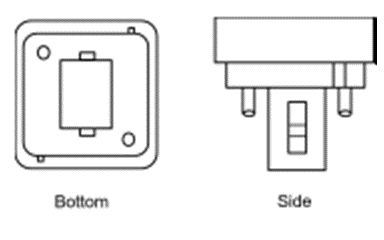
G24 Base Compatibility: 2-Pin vs. 4-Pin
| Base Family | Pin Count | Common Designation | What To Check | Installation Considerations |
|---|---|---|---|---|
| G24d | 2-pin | Often identified as G24d-style CFL bases | Confirm the physical lamp holder, the wattage of the existing CFL, the fixture orientation, the voltage, and the ballast condition. | Some LED replacements may work with compatible ballasts, but direct wiring or ballast bypass may be required if the ballast is incompatible or the product instructions call for it. |
| G24q | 4-pin | Often identified as G24q-style bases, including G24q-1, G24q-2, and G24q-3 applications | Confirm the pin layout, socket orientation, ballast type, dimming controls, and whether the existing fixture is compatible with the selected lamp. | HyLite’s current Plug-In Lamp resources reference G24q-1, G24q-2, and G24q-3, and the product is designed for direct installation with or without ballast when compatibility requirements are met. |
Can the Ballast Stay in Place?
Sometimes, yes. HyLite’s current Plug-In Lamp product page states that the lamp supports direct installation with or without a ballast and notes that the ballast compatibility list should be checked before installation.
A ballast should only remain in place when the specific ballast has been verified as compatible. If the ballast is incompatible, missing from the compatibility list, failing, or causing performance issues, follow the appropriate direct-wire or ballast-bypass installation instructions.
How to Identify the Correct G24 LED Replacement
Before ordering, gather a few details from the existing lamp and fixture. This helps confirm physical fit, electrical compatibility, and the best installation method.
Check Pin Count
Remove the existing CFL and confirm whether the base has 2 pins or 4 pins.
Read the Marking
Look for markings such as G24d, G24q, G24q-1, G24q-2, or G24q-3.
Confirm Ballast
Identify the ballast model and compare it against the current compatibility list.
Match Application
Check fixture orientation, voltage, dimming needs, and location rating.
When Is Direct Wiring Required?
Direct wiring or ballast bypass may be required when the existing ballast is incompatible, has failed, is not listed as compatible, or the product instructions call for Type B installation.
Direct wiring can also reduce future maintenance by removing the ballast as a potential failure point. A qualified professional should perform electrical work in accordance with the current instruction sheet and local electrical codes.
Where G24 LED Lamps Are Used
- Office buildings and tenant spaces
- Hotels, corridors, and common areas
- Schools and universities
- Healthcare and institutional facilities
- Retail stores and shopping centers
- Wall sconces, ceiling fixtures, and recessed cans
CFL vs. G24 LED Plug-In Lamps
| Category | Traditional CFL Plug-In Lamps | G24 LED Replacement Lamps |
|---|---|---|
| Energy Use | Higher energy consumption compared with LED replacements. | Lower energy use and improved long-term efficiency. |
| Lamp Life | Requires more frequent lamp replacement. | Long-life LED performance reduces relamping frequency. |
| Startup | May warm up slowly or flicker as the lamp and ballast age. | Instant-on performance when properly matched and installed. |
| Ballast | Requires a functioning ballast. | May install with or without ballast when compatibility requirements are met. |
| Disposal | CFL lamps contain mercury and require proper disposal. | LED lamps avoid the mercury concerns of traditional CFL lamps. |
Product & Installation Resources for G24 LED Replacement
Use these links to confirm the right HyLite G24 replacement model, compare related CFL replacement options, and review the current spec sheet and installation instructions before ordering or installing.
Start with the Current Plug-In Lamp Product Page
Ready to compare available HyLite G24 replacement models? View the current plug-in lamp specifications and compatibility information.
Frequently Asked Questions
Ready to Compare Available HyLite G24 Replacement Models?
View the current plug-in lamp specifications and compatibility information, or contact HyLite for help identifying the right base type, wattage, and installation method.
 English
 Spanish
 French
 Arabic
 Ukrainian
 Portuguese
 German
 Italian
 Russian
 Dutch
Dutch