
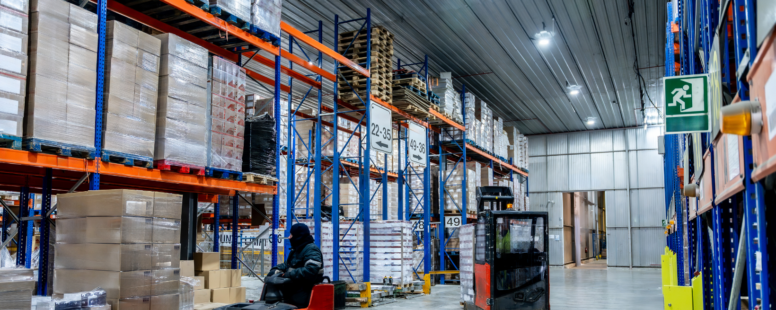
LED Lighting for Cold Storage and Refrigerated Warehouses
Freezer Room Lighting Upgrades
Cold storage facilities are some of the toughest environments any lighting system will ever face. Temperatures drop to -10°F and below, forklifts move constantly through narrow aisles, moisture condenses on every surface, and lights often run nearly around the clock. In many warehouses, these extreme conditions quickly expose the weaknesses of traditional fluorescent and HID fixtures.
LED technology has become the standard for cold storage lighting because LEDs perform better at freezing temperatures, providing brighter, safer, more reliable light while reducing energy use and maintenance costs. They thrive in demanding refrigerated environments.
This guide covers freezer lighting challenges, explains why LEDs work in sub-zero temps, helps select fixtures for aisles and open freezer rooms, and provides an ROI example showing the impact of a retrofit.
When the Temperature Drops, Lighting Problems Rise
Both fluorescent and HID fixtures struggle to ignite properly when temperatures plummet. It’s common for traditional lamps to glow dimly for several minutes before reaching anything close to full brightness. In a warehouse, that delay can create unsafe conditions for workers and forklift operators.
Fluorescent lamps rely on gas pressure and mercury vapor to produce light, two elements that react poorly to freezing temperatures. As the thermometer drops, so does light output, often creating dark aisles, shadowy corners, and inconsistent visibility between racks. HID fixtures may maintain brightness, but their color rendering and consistency decline over time.
Cold environments cause moisture and condensation around freezer doors and dock areas. Warm, humid air hitting cold fixtures creates water droplets on housings, wiring, and lenses, leading to corrosion, failures, and costly maintenance involving lifts, safety gear, and technicians in freezing conditions.
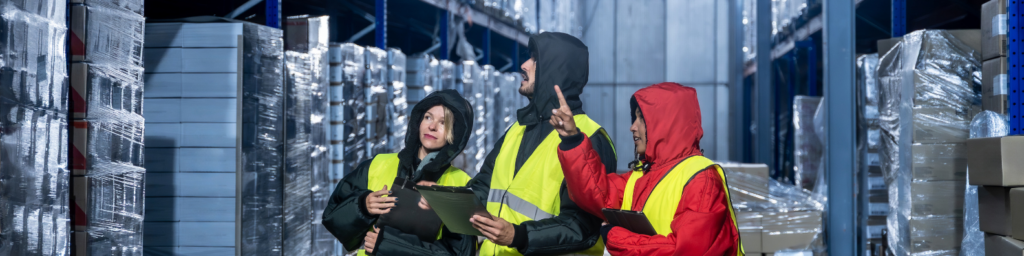
Why LEDs Love the Cold (More Than the Heat)
Unlike fluorescent lamps, LEDs don’t rely on gas pressure or mercury vapor. Unlike HID fixtures, they don’t need a warm-up time or a restrike period after shutting off. LEDs are solid-state electronic devices, and the colder the air around them, the easier it is to keep their internal components cool.
Keeping LED junction temperatures low is the trick to maintaining efficiency, lumen output, and long-term performance. In hot industrial spaces, LEDs often require robust heat sinks and thermal management systems to avoid overheating. But in a -10°F freezer room, the environment does most of the cooling work for you. The result is better efficacy, more consistent brightness, and longer fixture life.
Even in sub-zero conditions, instant-on LEDs light up at full brightness as soon as a worker enters an aisle. Freezers often use occupancy sensors to reduce energy waste in low-traffic areas, and the ability to turn fixtures on and off frequently without causing damage is a significant advantage. The pairing (quick sensors with cold-tolerant LEDs) offers one of the most impactful energy-saving opportunities in any refrigerated warehouse.
Aisles and Open Freezer Rooms
Cold storage spaces aren’t uniform, so aisles and open freezer rooms need very different lighting strategies. The right low-temperature LED fixtures make it easier to see labels, move safely, and reduce energy use throughout the facility.
In narrow aisles, lighting must emphasize vertical visibility and deliver light directly onto racking. In large open freezer rooms, fixtures must provide wide, even coverage from higher mounting heights while resisting condensation and impact.
Recommendations for optimal lighting:
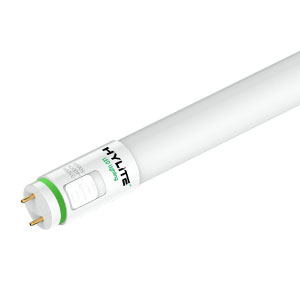
- For narrow aisles: Use linear or tube-style LEDs with aisle-shaped optics for vertical illumination.
- For sensor-driven spaces: Pair aisle fixtures with occupancy sensors for instant-on brightness and energy savings.
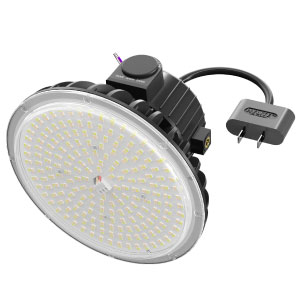
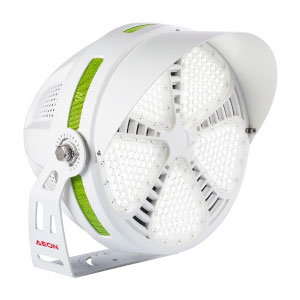
- For open freezer rooms: Choose high bay LEDs with wide beam angles for uniform coverage across large areas.
- For durability: Select sealed, high-IP fixtures with shatter-resistant lenses to withstand moisture, frost, and forklift impacts.
Why LED Retrofits Pay for Themselves Quickly
Imagine a 40,000-square-foot refrigerated warehouse equipped with 120 metal halide high-bay fixtures, each consuming roughly 460 watts, including ballast draw. Running 20 hours per day, those fixtures burn through more than 400,000 kilowatt-hours per year.
Replacing those fixtures with 160-watt LED high bays instantly cuts energy consumption by more than half. Over the course of a year, the LEDs use roughly 140,000 kilowatt-hours, saving about 262,000 kWh annually. At a conservative electricity rate of $0.10 per kWh, that’s approximately $26,000 in energy savings every year.
The picture becomes even more compelling once you consider reduced maintenance. Metal halide lamps dim over time, often requiring replacements every 12–18 months. Each lamp change requires scheduling, equipment, and time spent working inside a freezer. LEDs can operate for years without attention, eliminating nearly all of those maintenance costs.
Combining energy savings, maintenance cuts, and better lighting that enhances safety generally leads to paybacks in 2-3 years, sometimes sooner, with rebates.
Lighting Built for the Cold, Designed for Efficiency
Cold storage facilities operate in extreme conditions, but LED technology has made bright, consistent, and reliable lighting without the constant maintenance required by older systems.
For warehouses still relying on fluorescent or HID fixtures, upgrading to cold storage LED lighting is one of the most efficient, high-ROI improvements you can make. It reduces energy use and eliminates the constant maintenance challenges of lighting a sub-zero environment.
If you’re ready to enhance your current freezer lighting and check fixture options fitted to aisles, open rooms, or high-bay environments, we can help design a retrofit plan that delivers maximum savings and long-term performance. Reach out now to get started!

 English
 Spanish
 French
 Arabic
 Ukrainian
 Portuguese
 German
 Italian
 Russian
 Dutch
Dutch